A ceiling stain in the unit below
Water on a ceiling often comes from a pipe, fixture or drain in the unit above. But it can also come from a shared line in between.
A tenant calls about a stain on the ceiling. The unit above says it's dry. The building water bill is up, and nobody can say why. You need the source found, not a guess that opens walls in three units.
We find leaks in apartments, condos and business buildings across Orange. We trace the water back to the unit, the line and the spot, so the right pipe gets fixed and tenants stay in their homes.
Tell us about the building and what you're seeing. We'll explain what the inspection involves before you book.
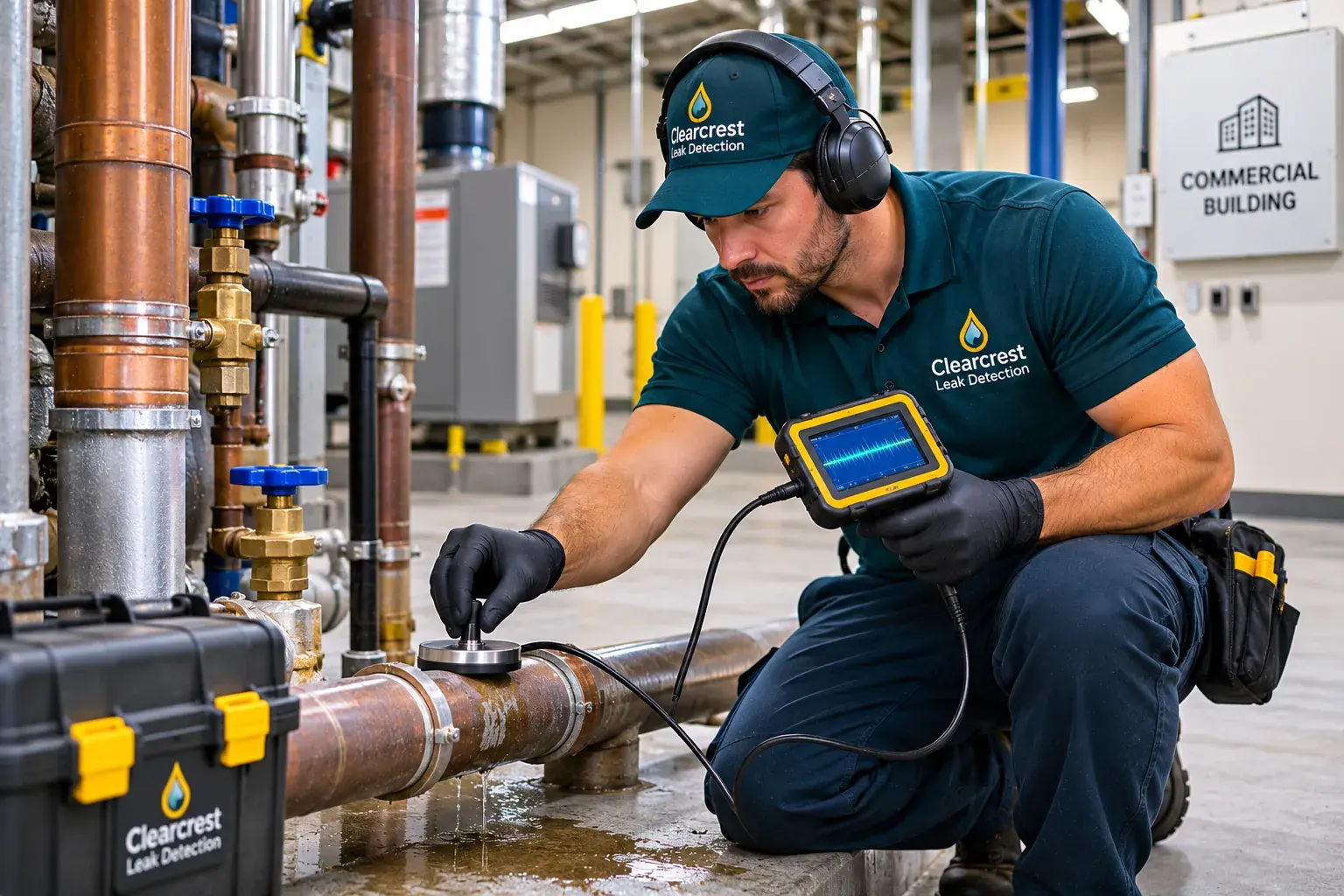
Commercial leak detection finds water leaks in buildings with many units or users, such as apartments, condos, offices and shops. Pros start with the water meter and the building's shut-off valves. They close off zones or units one at a time to narrow the leak down. Then moisture meters, thermal cameras and listening tools pinpoint the leak inside the right wall, ceiling or floor.
In a single home, water usually shows up near its source. In a building with many units, water travels. It runs along pipes, beams and floors, then shows up in a different unit, sometimes a floor below.
That's why we trace the building, not just the stain:
Our team is professional and experienced in this kind of work, and we explain each step to the property manager or owner as we go.
How every visit works
Warning signs
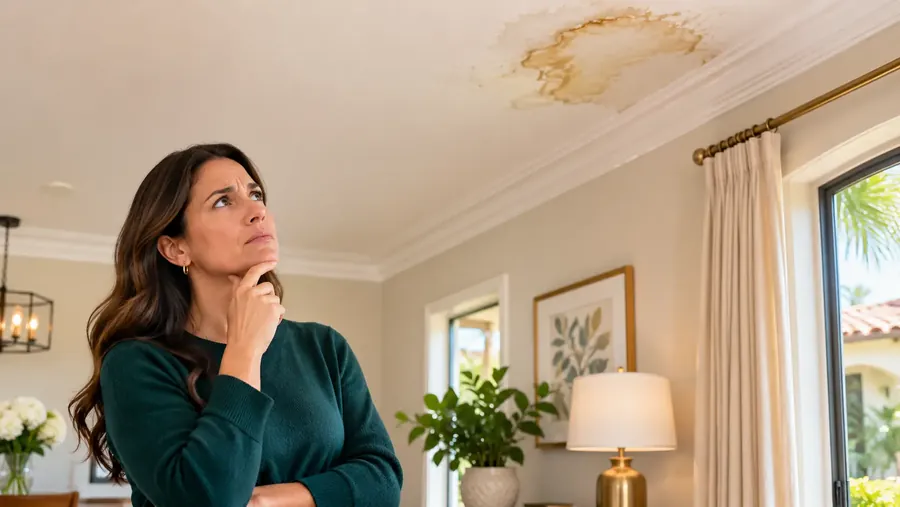
Water on a ceiling often comes from a pipe, fixture or drain in the unit above. But it can also come from a shared line in between.
If use hasn't changed but the bill has, water may be leaking where no one can see it.
If the meter keeps turning when the building is closed or quiet, water is going somewhere.
Damp or stained shared walls can point to a pipe running between two units.
Water that shows up in a shared space may come from a supply line running above or beside it.
Hidden water can spread across units before anyone sees a drip.
Water coming through a ceiling right now? Call (714) 439-5275, any hour. Shut off the water to the unit above if you can, and see what to do in a water leak emergency.
Common causes
One pipe can serve many units. A leak on that pipe can show up far from where it starts.
Buildings have many joints, valves and fixture connections. Each one is a place that can wear out.
Larger buildings often run higher pressure. Too much pressure strains pipes and joints.
Older buildings may still have their first pipes, which can wear thin and leak over time.
Toilets, water heaters, washers and dishwashers in one unit can leak into the unit below.
Our process

Where is the water showing? Which units are near it? Where are the shut-off valves? This sets the plan.
With water use stopped where possible, the meter shows if water is leaving the system.
We close valves one area at a time to find the section of the building that's leaking.
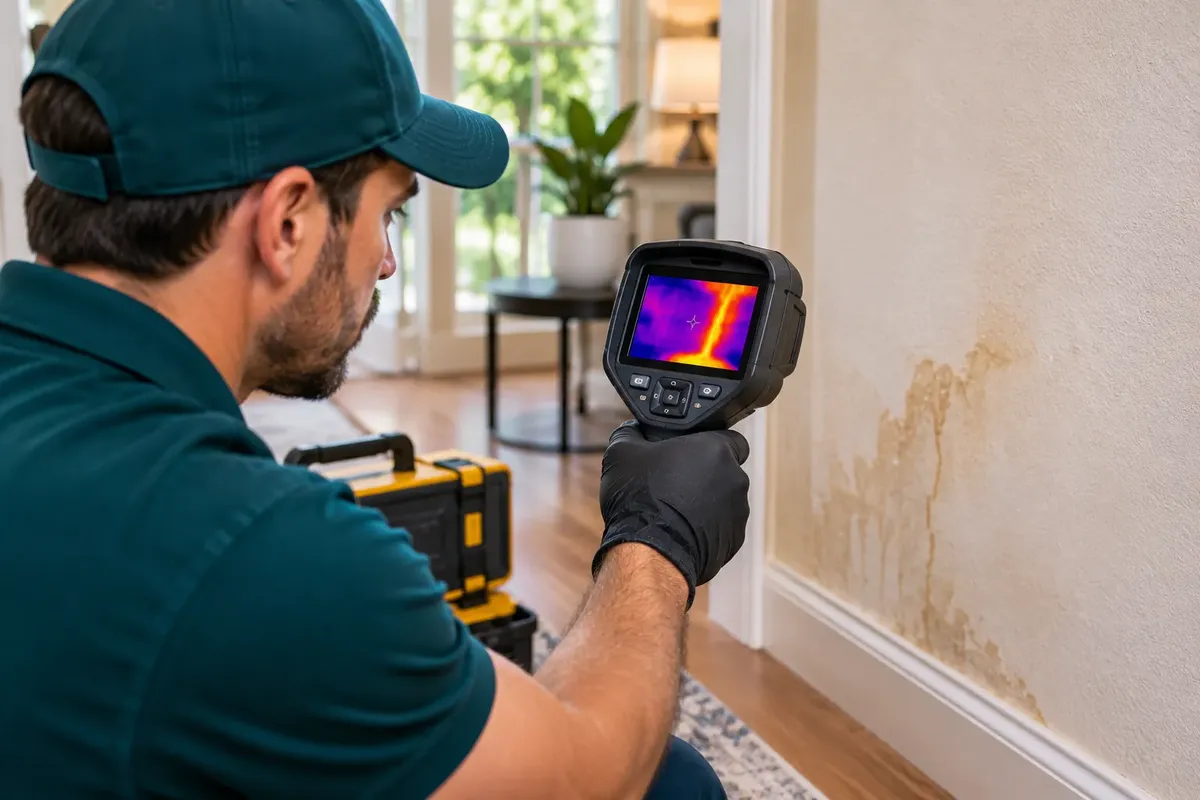
Moisture meters map where water has spread. Thermal cameras show wet or warm spots. Listening tools find the sound of water escaping a pipe.
We work unit by unit, and only enter the units the search needs. It helps if the manager lets those tenants know ahead of time.
We show you the source, the unit and the pipe. If you want, we can also take care of the repair.
Need to know which unit the leak is coming from? Call (714) 439-5275 or request a commercial leak inspection.
Equipment
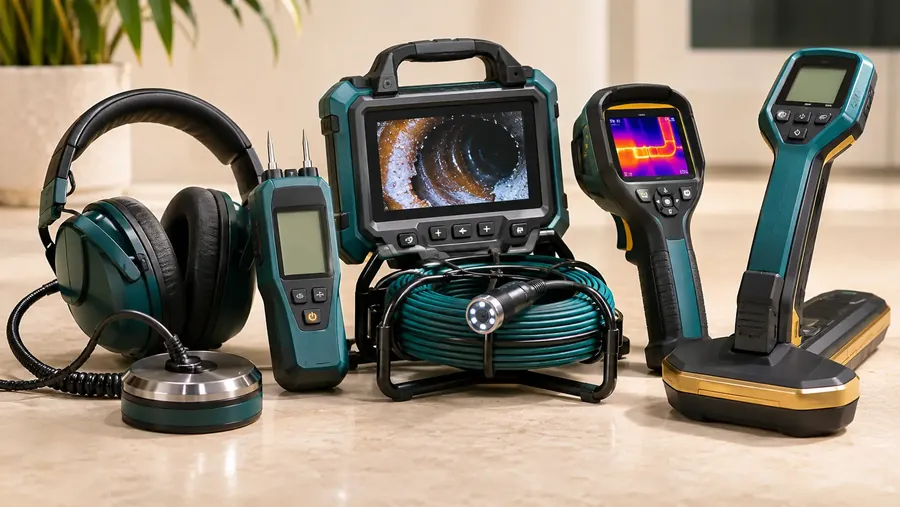
They show if the system or one section of it is losing water.
They map where water has spread across walls, ceilings and floors.
They show wet or warm patterns that point to a hidden leak.
They pick up the sound of water leaving a pressurized pipe through walls and floors.
They trace where shared lines run, so we follow the right path.

Before you open walls in more than one unit, call us first: (714) 439-5275.
Why choose us
Meter, zones and units come first, then the spot.
About 43% of homes in Orange are renter-occupied, from older buildings near Old Towne to complexes across the city. Leaks between units are a common call.
We explain what we found in plain words that owners, managers and tenants can follow.
Clear service terms and a 100% Satisfaction Guarantee.
Our commitments

FAQs
Still have a question? Call us any time at (714) 439-5275.
Yes. We close off units and lines one at a time and test each one. Then we pinpoint the leak inside the right unit.
Usually not. We only enter the units the search needs, and water is shut off only for short periods when testing calls for it.
Tell your landlord or property manager first. They can call a leak detection company to trace the source.
We check the meter, close off zones one at a time, and use moisture, thermal and listening tools to pinpoint the leak.
Yes. We work with owners, HOAs and managers, and explain the findings so everyone knows where the water came from.
It depends on the size of the building, the number of units involved, and how easy the lines are to reach. Call us and we'll explain what the inspection involves before you book.
Let tenants near the leak know about the visit, and have access ready for those units. Have the building's water bills and any notes on where water showed up. Know where the main and unit shut-offs are.
Service area
We trace leaks in apartments, condos and business buildings across Orange, and in nearby cities: Anaheim, Santa Ana, Tustin, Garden Grove and Villa Park. See all service areas.
What we do
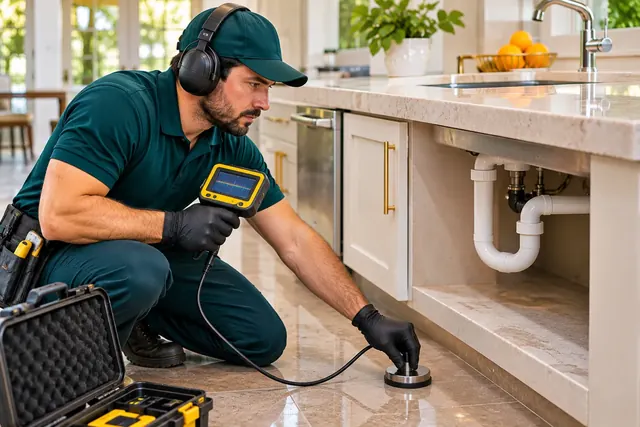
Warm floors or water running under concrete
Learn more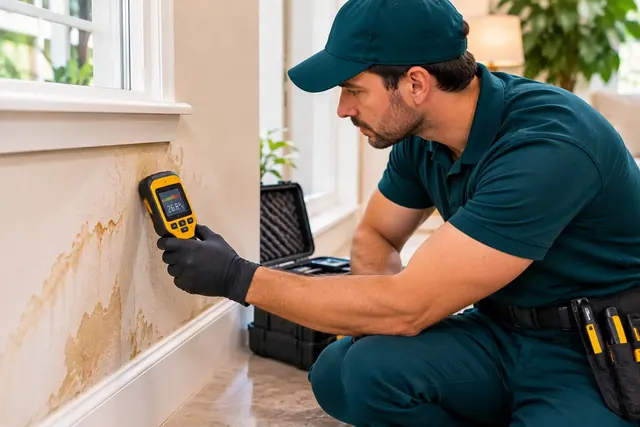
Stains and damp spots in walls and ceilings
Learn more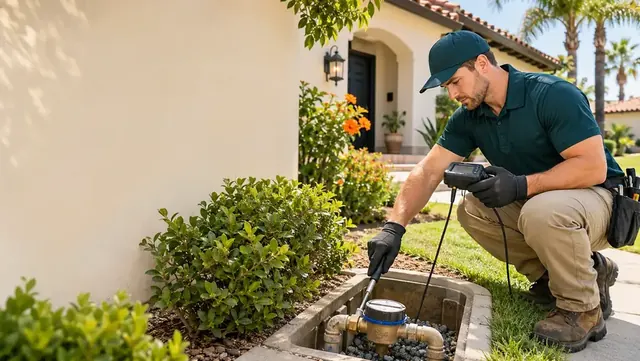
High bills, a moving meter, wet yard spots
Learn more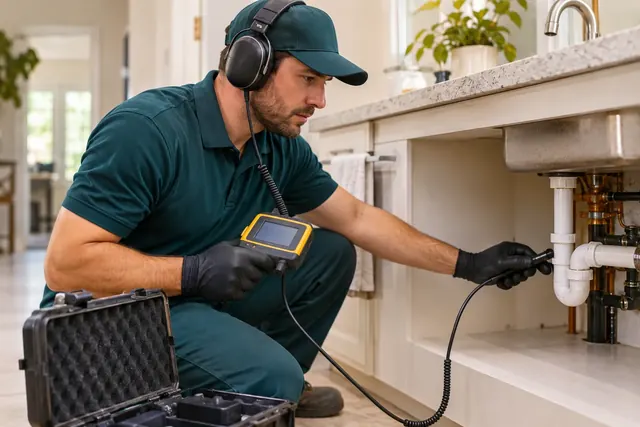
Pinhole leaks and leaking supply pipes
Learn more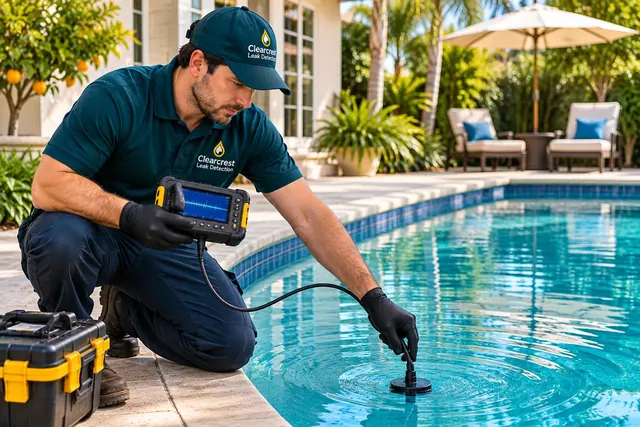
Pools and spas losing water
Learn more
Fixing the pool leak once it is found
Learn more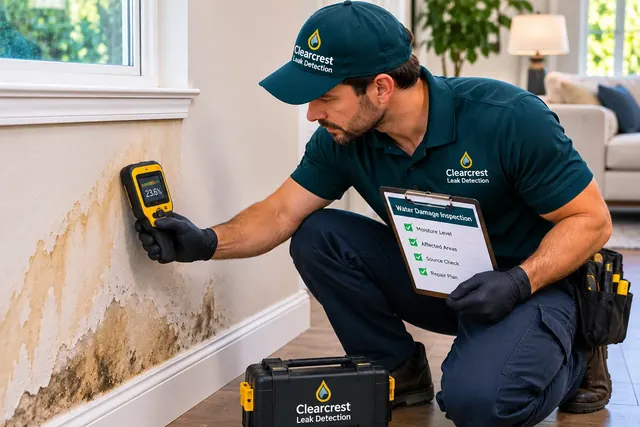
Active leaks, day or night
Learn more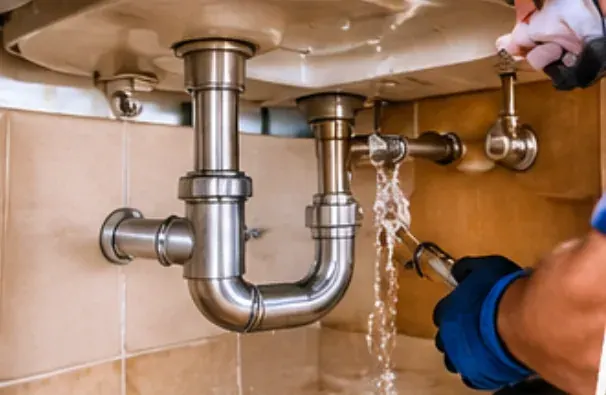
Pipe, slab and water line repairs
Learn more
Hidden water spreads from unit to unit. Call us, tell us where it's showing, and we'll trace it to the source and explain the findings before any walls are opened.
Answered 24/7 · Licensed, insured and certified · 100% Satisfaction Guarantee