A warm or hot spot on the floor
If one area of tile, wood or concrete feels warm when nothing else does, a hot water line under the slab may be leaking. It is one of the clearest slab leak signs.
A warm spot on the tile. The sound of water under the floor when every tap is off. A water bill that keeps climbing. These are classic signs of a leak in a pipe under your concrete slab.
We find slab leaks for Orange homeowners and property owners by testing and listening from above the floor. You learn where the leak is before anyone breaks concrete.
Tell us where the floor feels warm or where you hear water. We'll explain what the inspection involves before you book.
A slab leak is a leak in a water pipe that runs under or inside a home's concrete floor. Because you can't see it, it often shows up as a warm floor, a running water sound, or a high bill. Slab leak detection uses pressure tests to find which line is leaking, then acoustic and thermal tools to pinpoint the spot through the concrete.
A leak in a wall can be traced with a moisture meter and a small opening. A leak under four inches of concrete can't. Water under a slab spreads out under the floor, so where you feel it is not always where the pipe is broken.
That's why slab leak detection is about narrowing it down step by step:
Our team is professional and experienced in this kind of testing, and we explain each step as we go.
How every visit works
Warning signs
One sign can have other causes. Two or more together are worth testing.
If one area of tile, wood or concrete feels warm when nothing else does, a hot water line under the slab may be leaking. It is one of the clearest slab leak signs.
A hiss or rush under the floor when no faucet, toilet or appliance is running often means a pressurized line is leaking below you.
Turn off all water and watch the meter's leak dial. If it still turns and you see no water anywhere, the leak may be underground or under the slab.
A hot line leak means hot water keeps flowing out, so the water heater keeps working. You may see it on both the water and gas or electric bill.
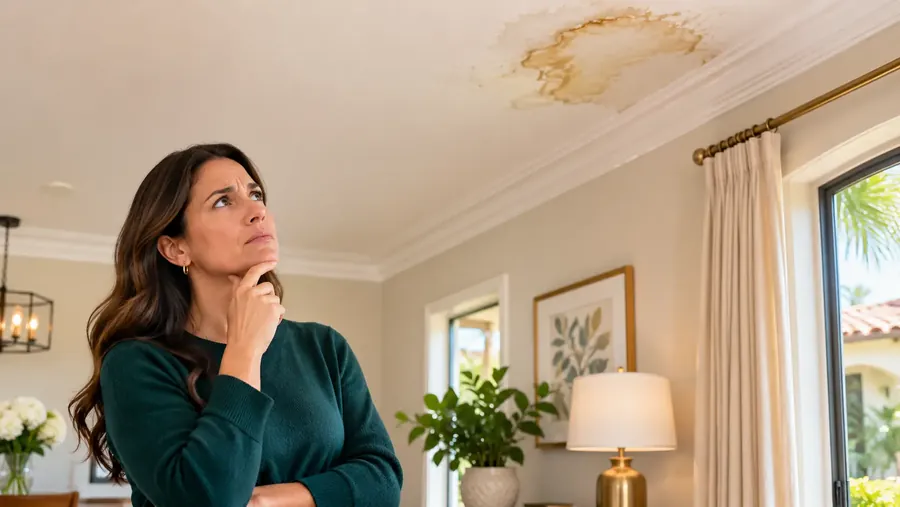
Water coming up from below can dampen carpet pads, loosen tile or wood flooring, or leave a mildew smell near the floor.
Cracks have many causes, so on their own they don't prove a leak. Together with the signs above, they're worth checking.
Feel a warm spot or hear water under the floor? Call (714) 439-5275. A slab leak doesn't fix itself, and every day it runs adds to the bill.
Common causes
Pipes under a slab sit in contact with concrete and fill. As water flows and pipes expand and shrink, they can rub. Over years, rubbing wears a thin spot that starts to leak.
Hot lines heat up and cool down every day. That constant change adds stress, which is one reason many slab leaks are on the hot side.
Large parts of Orange were built in the 1950s to early 1970s, a period when many Southern California homes were built on concrete slabs. Pipes from that era may be thinning with age, and a small pinhole can open under the floor.
Pressure that runs too high strains every joint and bend in the line, including the ones you can't see.
Small shifts in the soil under a home can put stress on pipes held in place by concrete.
Our process

Where is the warm spot? Where do you hear water? When did the bill change? This tells us which line and which part of the house to test first.
With all fixtures off, we check the water meter. If it moves, water is leaving the system.
We isolate each line and pressure test it. The line that loses pressure is the one that's leaking. This also tells us if the leak is under the slab or somewhere else.
Pipes under a slab don't always run where you'd expect. A line locator helps us follow the path so the search stays on the right line.
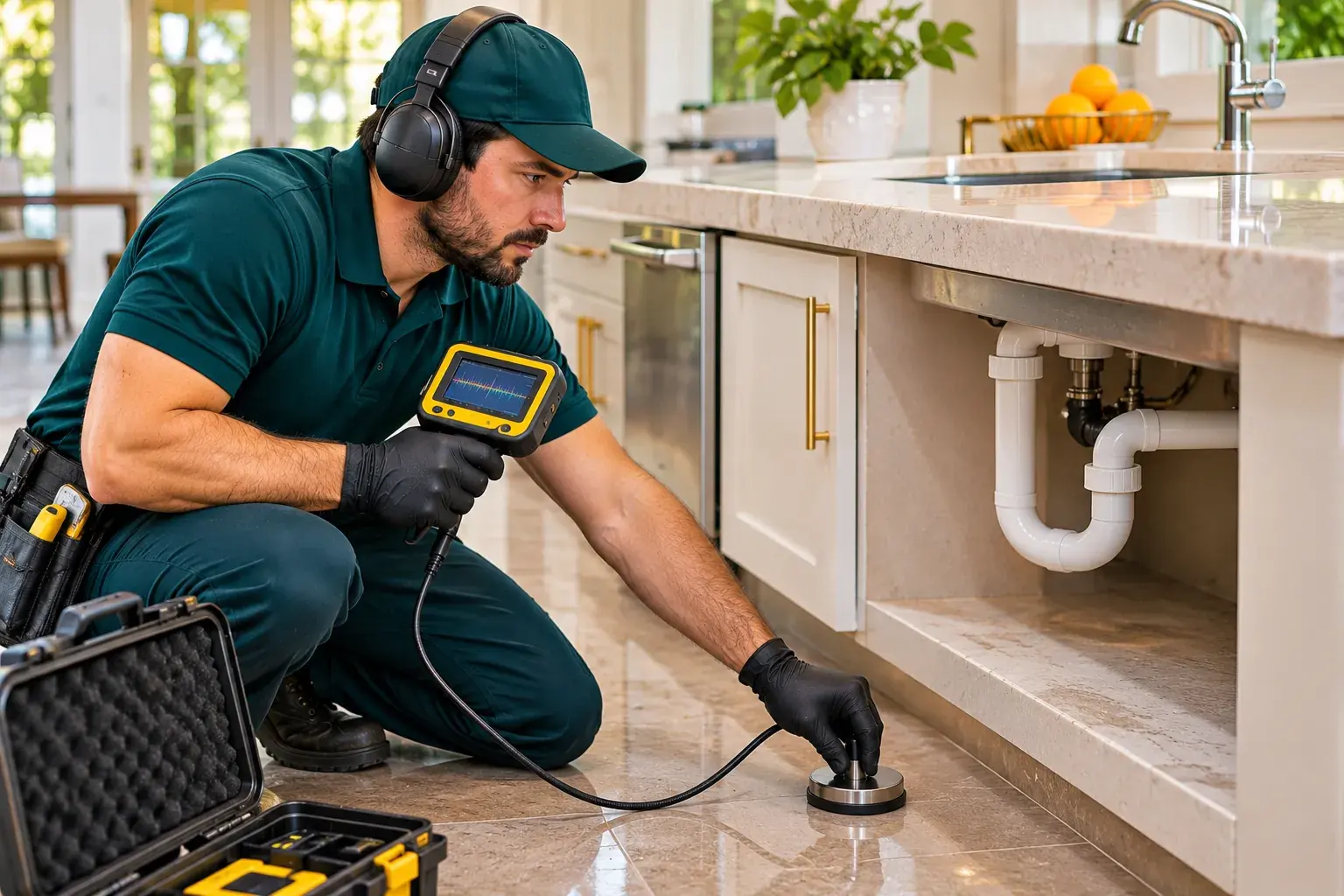
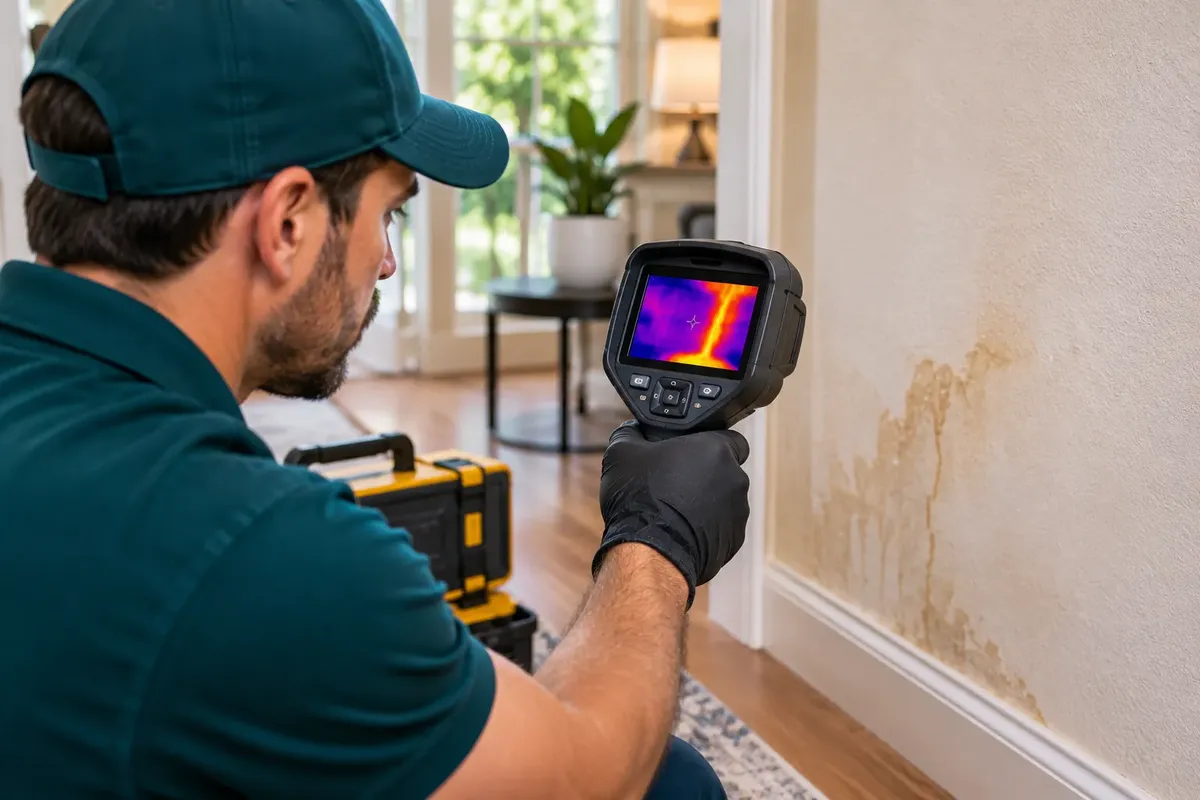
An acoustic listening device picks up the sound of water escaping. On hot lines, a thermal camera can show the warm area on the floor. Together they narrow the leak to a small spot.
We mark the spot on the floor and explain what we found. Options can include a spot repair through the slab or rerouting the line. If you want us to handle it, see slab leak repair on our water leak repair page.
Want to know for sure what's under your floor? Call (714) 439-5275 or request a slab leak inspection.
Equipment
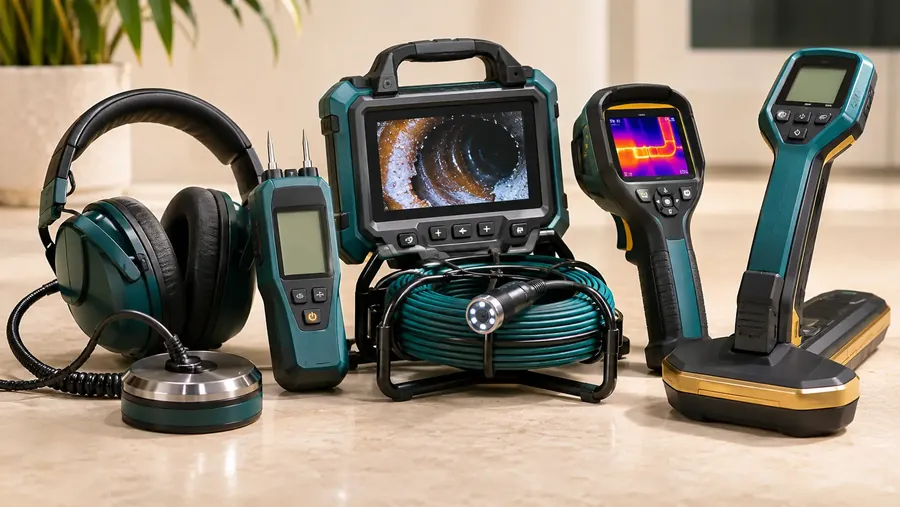
They show which line is losing water, and if the leak is under the slab at all. This step comes first, because it decides where the rest of the search happens.
Water escaping under pressure makes a sound. These devices amplify it through concrete and flooring, so a technician can follow it to the loudest point.
On a hot water line, the leak warms the concrete above it. A thermal camera shows that warm area as a clear shape on the floor.
A locator traces where the pipe runs under the slab, so the listening search follows the real path of the line.
For very small leaks that are hard to hear, a safe gas can be put into a drained line and picked up where it escapes through the concrete.

Before anyone breaks concrete, call us first: (714) 439-5275.
Why choose us
Every slab leak search starts by proving which line is leaking, so the search stays focused.
Many Orange homes date from the 1950s to early 1970s. We plan each slab leak test around the home in front of us.
You see the marked spot and hear your options in plain words.
If you want, we can also fix the leak we found.
Clear service terms and a 100% Satisfaction Guarantee.
Our commitments

The most common signs are a warm spot on the floor, the sound of running water with everything off, a water meter that keeps moving, and a higher bill. A pressure test confirms it.
Usually not. Finding the leak is done from above the floor with pressure tests, listening tools and thermal imaging. The floor is only opened later if you choose a spot repair, and then only at the marked spot.
A leaking hot water line warms the concrete right above and around the leak. The warm spot is a strong clue, but water can travel under the slab, so we confirm the exact spot with testing.
In most cases, yes, but don't wait. Water under a slab can damage flooring and lead to mold over time. If water is coming up through the floor, turn off the main water valve and call us.
It can. Water that runs under a slab for a long time can soak the soil and the flooring above it, and damp materials can grow mold. Finding it early lowers that risk.
It depends on your policy. Many policies treat the cost to find and access the leak, the pipe repair, and the water damage differently. Check your policy or call your insurer. A clear record of where the leak was found helps.
It depends on the size of the home, how many lines need testing, the type of flooring, and how deep or hard to hear the leak is. Call us, tell us what you're noticing, and we'll explain what the inspection involves before you book.
It depends on the home and the leak. A hot line leak with a clear warm spot is often quicker to find than a small cold line leak. We'll give you a better idea once we hear what you're seeing.
Write down where the floor feels warm and when you first noticed it. Have a recent water bill handy. Clear a path to the water heater, the main shut-off and the water meter. If you can, keep pets in another room.
Service area
We find slab leaks in homes across Orange, from Old Towne to East Orange, and in nearby cities in Orange County: Anaheim, Santa Ana, Tustin, Garden Grove and Villa Park. See all service areas.
What we do
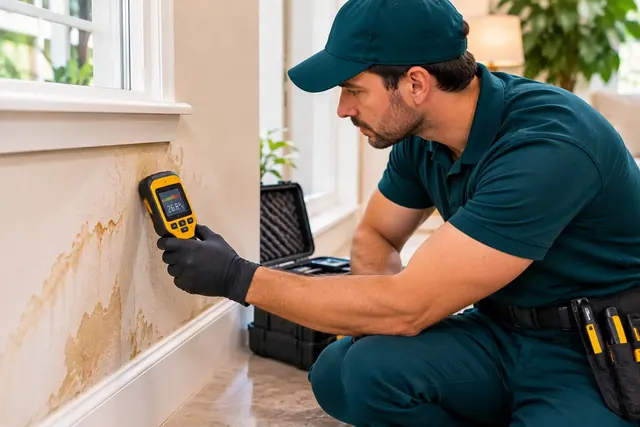
Stains and damp spots in walls and ceilings
Learn more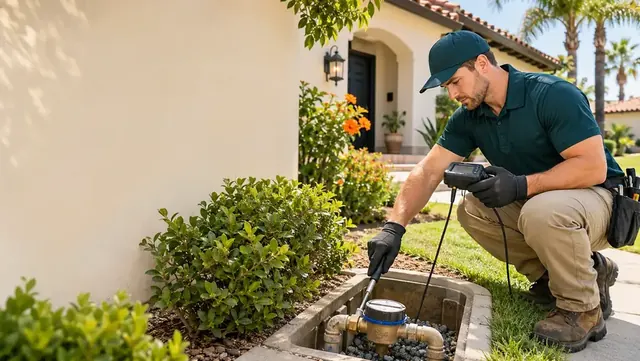
High bills, a moving meter, wet yard spots
Learn more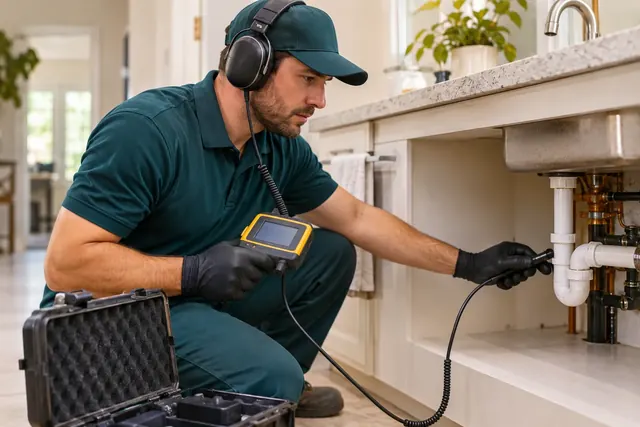
Pinhole leaks and leaking supply pipes
Learn more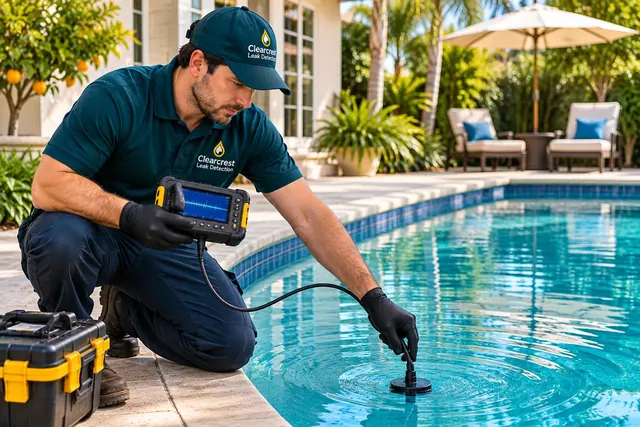
Pools and spas losing water
Learn more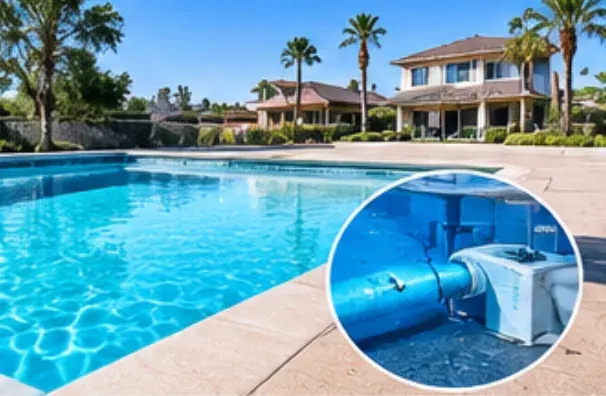
Fixing the pool leak once it is found
Learn more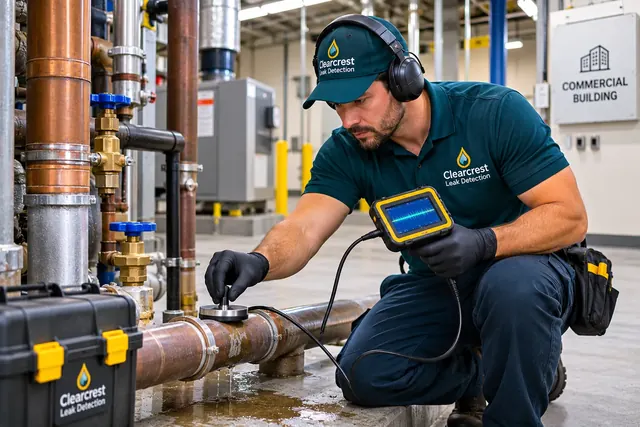
Apartments, condos and business buildings
Learn more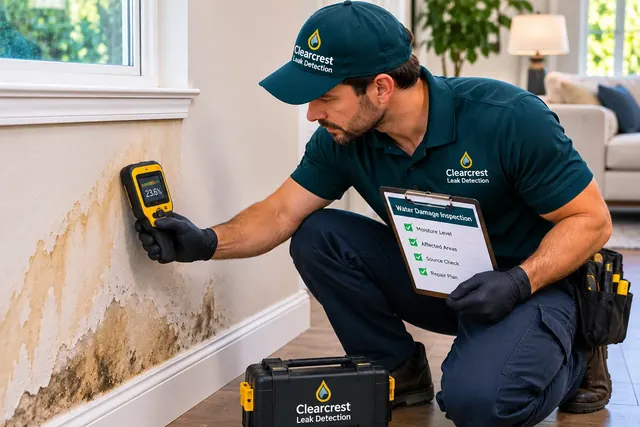
Active leaks, day or night
Learn more
Pipe, slab and water line repairs
Learn more
You don't have to break up a room to find out. Call us, tell us what you're noticing, and we'll find the leak and explain your options before any concrete is touched.
Answered 24/7 · Licensed, insured and certified · 100% Satisfaction Guarantee